
Puri Jagannath Temple is one of the most famous Hindu temples in India. It is located in the coastal city of Puri, in the state of Odisha. The temple is dedicated to Lord Jagannath, a form of Lord Vishnu. The word “Jagannath” means “Lord of the Universe.” The temple is part of the Char Dham pilgrimage, along with Badrinath, Dwarka, and Rameswaram.
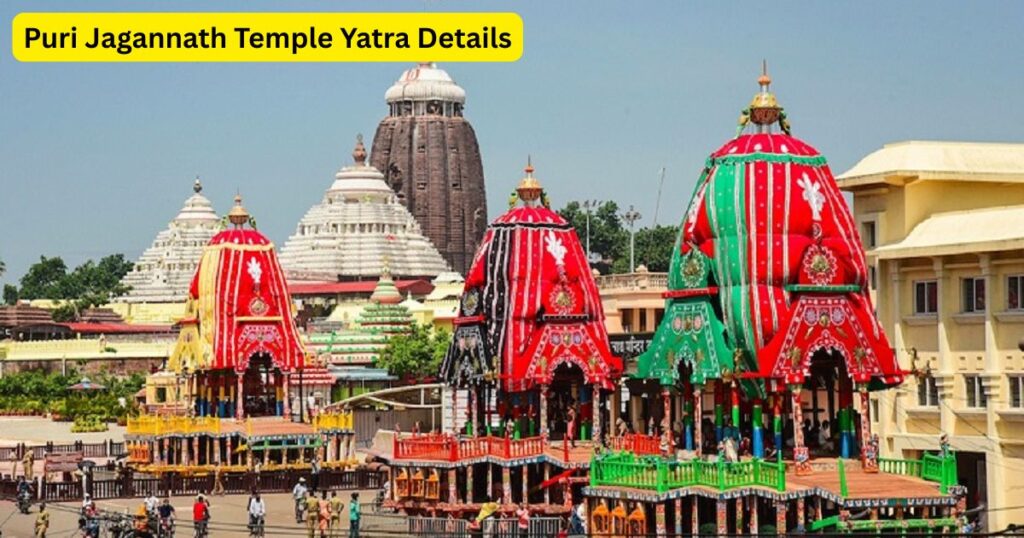
Every year, millions of devotees visit this temple to seek blessings. It is one of the tallest temples in India, standing at 65 meters (214 feet) high. The temple is also known for its grand Rath Yatra (Chariot Festival), which attracts more than 1 million people every year.
Historical Background
The Puri Jagannath Temple was built by King Anantavarman Chodaganga Deva of the Eastern Ganga Dynasty in the 12th century, around 1136 CE. It took several years to complete the structure. Historical records show that the temple was later developed by many kings, including King Ananga Bhima Deva and King Purushottama Deva.
According to legends, the original image of Lord Jagannath was made by Lord Vishwakarma himself from wood. The temple has faced several attacks in history, especially during the Mughal period, yet it still stands as a symbol of faith and devotion.
Location and Architecture
The Jagannath Temple is located at Puri (19.8°N, 85.8°E), about 60 km from Bhubaneswar, the capital of Odisha. The temple covers an area of over 400,000 square feet (approx. 10 acres) and is surrounded by a 20-foot-high wall known as the Meghanada Pacheri.
The temple follows Kalinga architecture, which uses heavy stones and pyramid-style towers. The main temple is built on a raised platform and includes four main structures:
- Vimana (Sanctum Sanctorum) – where the deities are kept.
- Jagamohan (Audience Hall) – where devotees gather.
- Nata Mandir (Dancing Hall) – used for music and dance offerings.
- Bhoga Mandap (Offering Hall) – where food is offered to the gods.
The main spire (Shikhar) is 65 meters tall, and the temple has four gates named Singhadwara, Ashwadwara, Hathidwara, and Vyaghradwara, each facing a cardinal direction.
The Deities of the Temple
The Puri temple is unique because it houses three main deities carved from sacred Neem wood (Daru):
- Lord Jagannath – the Lord of the Universe
- Lord Balabhadra – his elder brother
- Goddess Subhadra – his sister
The idols are replaced every 12 to 19 years during the special ritual known as Nabakalebara. The last Nabakalebara was held in 2015, and the next one is expected around 2033. The temple also contains the idol of Sudarsana Chakra and many smaller deities.
The Sacred Kitchen (Ananda Bazaar)
The temple has one of the largest kitchens in the world. It is believed that about 56 varieties of food items (Mahaprasad) are prepared every day for the deities. The kitchen has 752 wood-fired clay ovens (chulas) and more than 600 cooks (Suaras) and 400 assistants (Mahasuaras) work daily.
The most amazing fact is that although the cooking is done in earthen pots stacked on top of each other, the food in the top pot cooks first — a mystery that no one has been able to explain scientifically.
The Rath Yatra Festival
The Rath Yatra, or Chariot Festival, is the most famous event of the temple. It is celebrated every year in June or July, on the second day of the bright fortnight of Ashadha month. During the festival, the three deities — Jagannath, Balabhadra, and Subhadra — are taken out of the temple in three giant wooden chariots.
- Nandighosa (Lord Jagannath’s chariot) – 45.6 feet high with 16 wheels
- Taladhwaja (Lord Balabhadra’s chariot) – 44.8 feet high with 14 wheels
- Darpadalana (Goddess Subhadra’s chariot) – 43 feet high with 12 wheels
Each chariot is made new every year using about 4,000 pieces of wood, brought from Nayagarh and Dasapalla forests. More than 1,000 carpenters work for 58 days to build them. The festival attracts over one million devotees, making it one of the largest religious gatherings in the world.
Rituals and Daily Worship
Every day, about 24 main rituals and 50 smaller rituals are performed in the temple. The day starts early at around 5 AM with Mangal Aarti (morning prayer). The deities are offered food six times a day, including Gopal Vallabh Bhoga, Raj Bhoga, and Sandhya Dhupa.
Special rituals like Snana Yatra, Anavasara, and Nabakalebara happen at specific times of the year. The temple follows a strict time schedule for each puja. Devotees believe that seeing Lord Jagannath even once in a lifetime brings moksha (liberation).
Mysteries of the Temple
The Jagannath Temple is known for many unexplained facts that surprise both scientists and devotees:
- Flag Mystery – The temple flag always flutters against the wind direction.
- No Shadow – The main dome casts no shadow at any time of the day.
- Bird-Free Zone – No bird or airplane flies directly above the temple.
- Sound Reversal – The sea sound disappears near the temple entrance and reappears once you move away.
- Cooking Miracle – The top pot cooks first though heat comes from below.
These mysteries make the temple not only a place of worship but also a wonder of faith and architecture.
Temple Administration and Management
The temple is managed by the Shree Jagannath Temple Administration (SJTA), formed under the Shree Jagannath Temple Act of 1955. The Gajapati King of Puri is the traditional Chief Servitor (Adhyasevaka) of Lord Jagannath.
The temple earns an annual revenue of around ₹200 crore, including donations, offerings, and tourism. Around 5,000 people, including priests, servitors, and temple staff, are employed. Security is maintained by a special police wing called Jagannath Temple Police.
Tourism and Pilgrimage Statistics
Puri is visited by around 10 million pilgrims and tourists every year. The Rath Yatra week alone attracts 1.2–1.5 million people. The temple is open from 5:00 AM to 11:00 PM every day.
Nearby tourist spots include Puri Beach, Chilika Lake (60 km), Konark Sun Temple (35 km), and Pipili village (25 km). The nearest airport is Bhubaneswar International Airport, about 60 km away, and the Puri Railway Station connects the city to all major Indian cities.
Importance in Hinduism
Jagannath Temple is not just a temple but a spiritual symbol of unity. People of all castes, languages, and states visit it. Lord Jagannath is considered a universal god, and His devotees come from India and abroad.
The temple represents Bhakti (devotion) and equality, as the Mahaprasad is shared by everyone without discrimination. The Rath Yatra shows that the Lord Himself comes out to meet His devotees, symbolizing compassion and accessibility of divinity to all.
Timings of Temple
| Service | Timing | Price / Donation |
|---|---|---|
| General Darshan (free queue) | ~ 5:30 AM – 9:00 PM | Free entry |
| VIP / Donation Darshan Pass | Same hours; separate faster queue | ₹ 200 per person |
| Free pass exemptions | — | Age <10, age >65, Divyangjan (disabled) exempt from ₹200 donation pass |
| Typical puja / abhishek timings | Morning Puja ~ 7:00 AM – 8:30 AM, Rudrābhishek ~ 7:00 AM – 8:30 AM | Depends on type of seva (separate booking) |
Preservation and Future Plans
The temple has survived more than 800 years of natural and human challenges. The Archaeological Survey of India (ASI) takes care of its preservation. In 2021, the government started a ₹800 crore Jagannath Heritage Corridor Project to improve infrastructure and pilgrim facilities.
New projects include:
- Wider roads and clean zones around the temple
- Better queue systems for darshan
- Digital ticket booking and donation systems
- Improved drainage and lighting for Rath Yatra
These efforts will help preserve this holy shrine for future generations while maintaining its ancient glory.
What are the Imp Sevas and Darshans are available
| Sr. No. | Service | Timing / Notes | Charge / Donation |
|---|---|---|---|
| 1 | General Darshan | Daily approx 5:30 AM to 9:00 PM | Free entry |
| 2 | “Donation” / VIP Darshan Pass | Same visiting hours; allows quicker entry | ₹ 200 per person |
| 3 | Rudrābhiṣek / Special Abhishek Puja | Daily early morning approx 7:00 AM to 8:30 AM | Charge varies — not publicly listed |
| 4 | Bilva Patra / Afternoon / Other Standard Poojas | Approx mid-day: e.g., ~1:00 PM; also listed as “Special Pooja 7:00 AM, 1:00 PM, 4:30 PM” | Varies depending on items offered |
| 5 | Narayan Nagbali / Kāl Sarp Dosha / Pitru-Dosh Seva | These are scheduled special rituals (multi-hour) | Charges vary; need direct booking |
| 6 | Online Booking for Puja / Live Streaming Seva | Available via the temple trust website | Online service fees apply (varies) |
Overview Table
| Feature | Details |
|---|---|
| Location | Puri, Odisha, India |
| Deity | Lord Jagannath, Lord Balabhadra, Goddess Subhadra |
| Built By | King Anantavarman Chodaganga Deva |
| Built In | Around 1136 CE |
| Height | 65 meters (214 feet) |
| Temple Area | Around 10 acres |
| Main Festival | Rath Yatra (June–July) |
| Visitors per Year | About 10 million |
| Daily Rituals | 24 major rituals |
| Mahaprasad Items | 56 varieties |
| Cooks and Servitors | Around 1,000 people |
| Managing Body | Shree Jagannath Temple Administration (SJTA) |
| Annual Income | Approx. ₹200 crore |
| Next Nabakalebara | Expected around 2033 |
Frequently Asked Questions (FAQs)
1. Where is the Jagannath Temple located?
It is located in Puri city, Odisha, about 60 km from Bhubaneswar.
2. Who built the Puri Jagannath Temple?
It was built by King Anantavarman Chodaganga Deva of the Eastern Ganga Dynasty in the 12th century.
3. What is the height of the Jagannath Temple?
The temple is about 65 meters (214 feet) high.
4. Which festival is most famous in Puri?
The Rath Yatra, or Chariot Festival, is the most important festival celebrated every year in June or July.
5. How many deities are there in the temple?
There are three main deities — Lord Jagannath, Lord Balabhadra, and Goddess Subhadra.
6. How often are the idols replaced?
The wooden idols are replaced every 12 to 19 years during Nabakalebara.
7. What is Mahaprasad?
Mahaprasad is the holy food offered to Lord Jagannath, consisting of 56 items cooked in clay pots.
8. How many people visit the temple every year?
Around 10 million devotees and tourists visit annually.
9. Is the temple open to all religions?
Only Hindus are allowed inside the main temple, but people of all religions can witness the Rath Yatra.
10. What are the nearby attractions?
Nearby attractions include Konark Sun Temple, Chilika Lake, and Puri Beach.
In conclusion, the Puri Jagannath Temple is not just a place of worship; it is a living symbol of India’s faith, culture, and mystery. With its rich history, architectural beauty, and deep spiritual meaning, it continues to inspire millions around the world.
Would you like me to make a shorter SEO version of this (about 800 words) or a PDF-ready formatted version for download?